What to Wear to Reformer Pilates (and the Grip Socks Rule)
- 6 hours ago
- 4 min read

TL;DR: Wear fitted, stretchy activewear that stays put when you are upside down: leggings or fitted shorts and a snug top. Avoid anything loose, baggy or with zips and buttons, which catch on the springs and ride up. Grip socks are required for safety and hygiene, so bring a pair or buy them at reception. Bring water. Everything else you need is provided.
The night before a first class, most people stand in front of the wardrobe overthinking what to wear to reformer pilates. Here is the reassuring bit: you almost certainly already own what you need. We have welcomed first-timers onto the reformers at our Bondi studio since 2002, and the only people who get it wrong are the ones who turn up in loose gym clothes or forget grip socks. Get those two things right and you are sorted.
What should you wear to reformer pilates?
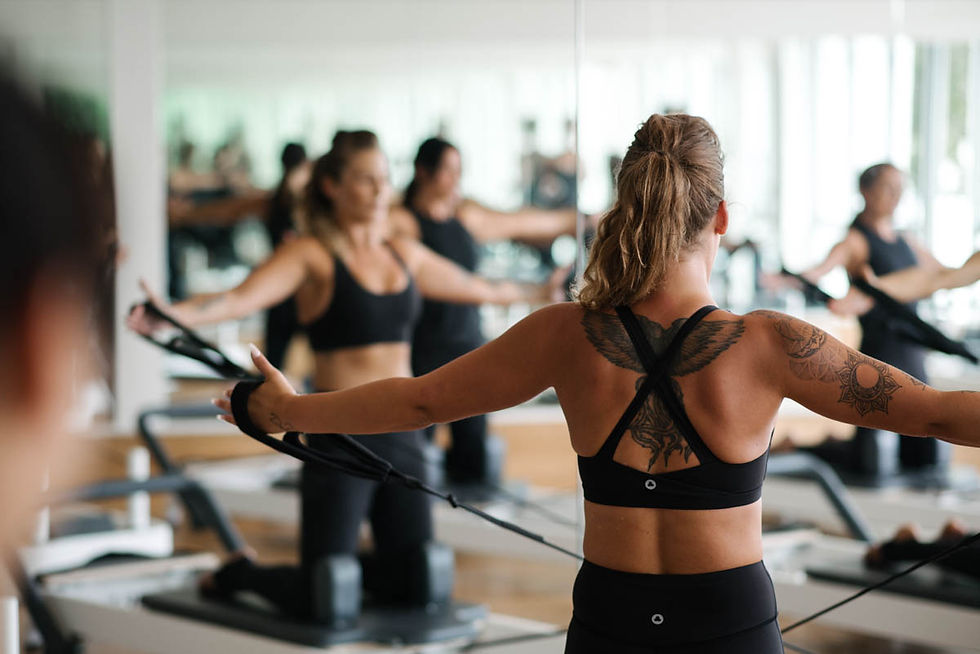
Wear fitted, stretchy activewear that stays in place when you move through every angle, including lying on your back with your legs in the air. High-waisted leggings are the reformer standard because they do not slide down during rolls, stretches and leg-in-strap work, and a snug top stays put instead of falling over your face in supine exercises. Close-fitting clothing also lets the teacher see your alignment and correct it, which is half of what you are paying for. You do not need expensive gear for your first class. Any well-fitting workout clothes you own will do.
What to wear and what to avoid
The simplest way to think about it is fitted over loose, and nothing that can catch.
Wear this | Avoid this |
High-waisted leggings or fitted shorts | Baggy track pants or loose shorts |
A snug t-shirt, singlet or crop | Oversized or flowing tops that ride up |
A supportive low-impact sports bra | Underwire or loose bras (no jumping, but support helps) |
Grip socks | Bare feet, or regular socks that slip |
Hair tied back | Zips, buttons, buckles or jewellery that scratch the equipment |
If you are unsure, fitted and simple always wins. Reformer is low-impact and there is no jumping in a standard class, so you do not need heavy-duty support, just clothing that moves with you and stays where you put it.
Why are grip socks required for reformer pilates?
Grip socks are required for two reasons: safety and hygiene. The reformer carriage and footbar are smooth and constantly moving, so plain socks slip, and even a small foot slip under spring load throws off your form and risks injury. The rubberised grip on the sole anchors your feet so you can press, balance and use the right muscles with control. On the hygiene side, grip socks put a barrier between your feet and shared equipment used by class after class through the day. For this reason most pilates and barre studios, ours included, require them. Full-foot grip socks that cover heel and toe are best for shared reformers.
If you forget yours, do not stress. We keep grip socks at reception at our Bondi studio, so you can grab a pair on the way in.
What should you bring to your first class?
Bring almost nothing. You need grip socks, a water bottle and yourself. At our Bondi studio, reformers, mats, towels, showers, hairdryers and herbal tea are all provided, so there is no need to lug gear in. Leave your phone in the cubby, tie your hair back, and arrive ten to fifteen minutes early so you can be shown the machine before class starts. That early arrival is the single best thing a nervous beginner can do.
What should men wear to reformer pilates?
Men should wear the same fitted principle: stretchy athletic shorts or leggings and a close-fitting t-shirt, plus grip socks. The one thing to watch is loose gym shorts, which ride up and gape during supine and leg-in-strap exercises. Fitted compression shorts under looser shorts, or proper training tights, solve it. Reformer pilates is very much a workout for men too, and nobody is paying attention to your outfit.
Frequently asked questions
Can you wear normal socks for reformer pilates?
No. Regular socks slip on the smooth, moving carriage, which compromises your form and is a genuine injury risk under spring tension. You need grip socks with a rubberised, non-slip sole. Most studios require them.
Can you do reformer pilates barefoot?
At most studios, including ours, no. Grip socks are required for hygiene on shared equipment and for the traction that keeps your feet anchored. Some private or home settings allow bare feet, but group studios almost always ask for grip socks.
Do you need special clothes for reformer pilates?
No. You need fitted, stretchy clothing you can move in, which most people already own. Specialist pilates leggings are nice if you train often, but any snug activewear works perfectly for your first class and beyond.
What do I wear if I don't own activewear?
Any fitted, stretchy clothing works: leggings or close-fitting shorts and a snug t-shirt that will not ride up. Avoid loose cotton, denim and anything with zips. You do not need to buy anything for a first class.
Do I need to bring my own mat or equipment?
No. At our Bondi studio the reformer, mats and towels are all provided. You only need grip socks and water, and we keep grip socks at reception if you forget.
Stop overthinking it, and come in
Fitted clothes, grip socks, a water bottle. That is the entire dress code, and you almost certainly have it already. The rest, the machine, the mat, the towel, the teacher who shows you the ropes, is waiting for you.
Try your first class at our Bondi studio on the 21-day unlimited trial. Turn up fitted, grab grip socks at reception if you need them, and you are good to go. Start your 21-day unlimited trial.